
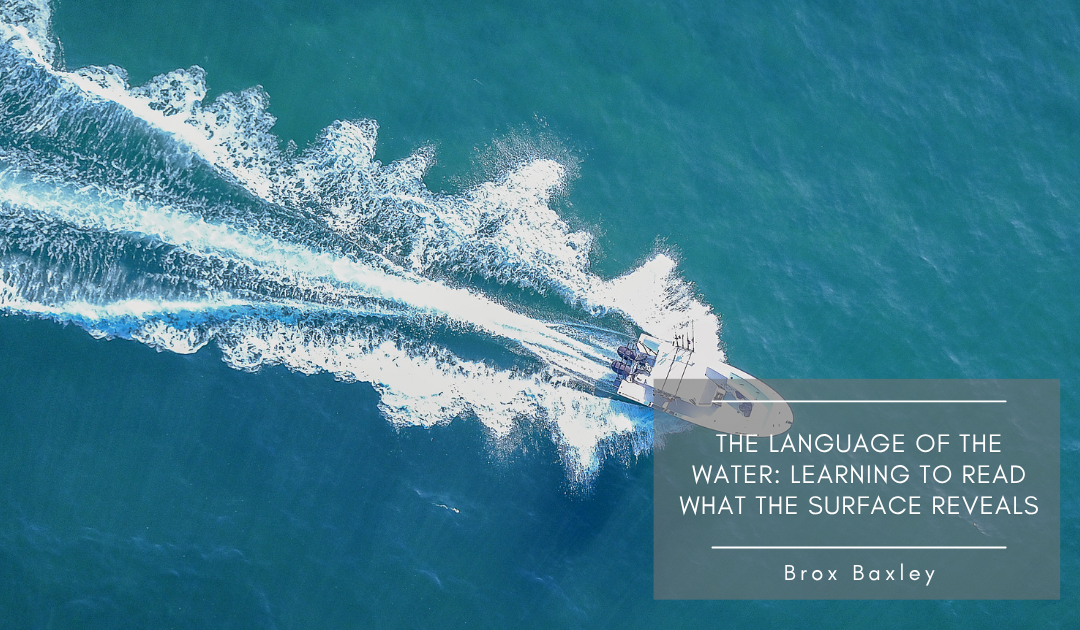
The water may look calm and predictable from a distance, but spend enough time around it and you will realize that the surface is constantly communicating. Ripples, wakes, color changes, floating debris, and subtle shifts in texture can all reveal something about what is happening beneath or around the boat.
Learning to notice these details can make boating more enjoyable and help you become more aware of your surroundings. You do not need to be an expert to start reading the water. You simply need to slow down and pay attention.
Start With the Texture
One of the easiest things to observe is the texture of the surface.
Smooth water can indicate sheltered conditions, while small ripples may reveal a light breeze moving across the area. When the surface begins developing larger, irregular waves, conditions may be changing.
Look beyond the size of individual waves and notice the overall pattern. Are they coming consistently from one direction, or are they crossing one another? Is the water becoming progressively rougher as you move away from shore?
These observations can help you understand how conditions are developing rather than simply reacting after they have already changed.
Learn to Recognize Wind Patterns
Wind leaves fingerprints on the water.
Even when the breeze is difficult to feel from your position, you can often see its influence on the surface. Darker patches, lines of ripples, or areas where the water suddenly changes texture may indicate shifting airflow.
Watch how these patterns move over time. A patch of textured water traveling toward you can provide an early visual clue that the wind is reaching your area.
The goal is not to predict everything perfectly, but to become more aware of changes before they become obvious.
Pay Attention to Wakes
A boat wake is more than a disturbance that disappears behind another vessel. It can tell you something about traffic, direction, and how water is moving through a particular area.
Notice how a wake spreads and interacts with the surrounding water. In confined waterways, wakes may reflect from shorelines or structures and return from different directions, creating confused surface conditions.
Understanding this behavior can help you anticipate how your boat may respond rather than being surprised by every passing wake.
Watch for Changes in Color
Water color can change for many reasons.
Depth, bottom composition, sunlight, vegetation, sediment, and weather can all influence what you see. A sudden transition from darker to lighter water may indicate a change in depth or underwater conditions, but visual appearance should never replace proper navigation information.
Instead, treat color changes as observations that encourage closer attention.
The more familiar you become with a particular waterway, the easier it becomes to recognize what looks normal and what appears unusual.
Notice Floating Clues
Debris and floating material can also provide useful information.
Branches, leaves, foam, or other material may indicate recent water movement, runoff, current direction, or activity upstream. After rain, for example, waterways can carry additional debris into areas that were previously clear.
These clues remind you that water is constantly moving and connecting different parts of the landscape.
Look Beyond the Surface
Perhaps the most important lesson is that the surface is only part of the story.
The water reflects wind, weather, currents, boat traffic, shoreline features, and changes beneath the surface. Learning to interpret these signals develops a stronger sense of awareness.
That awareness is especially valuable when exploring unfamiliar areas. Instead of simply looking ahead, you begin observing patterns around the entire boat.
Become a Student of the Water
Reading the water is not about memorizing a list of signs. It is about developing curiosity.
Spend a few minutes during each outing observing how the surface changes with wind, time, traffic, and weather. Compare what you see with what you experience at the helm.
Over time, those observations become instinctive. You start noticing subtle changes before they become significant, and ordinary trips become opportunities to learn.
The water has its own language. Once you begin paying attention, every ripple, wake, and shifting pattern becomes another piece of the story.